
 12 July 2026
Styling
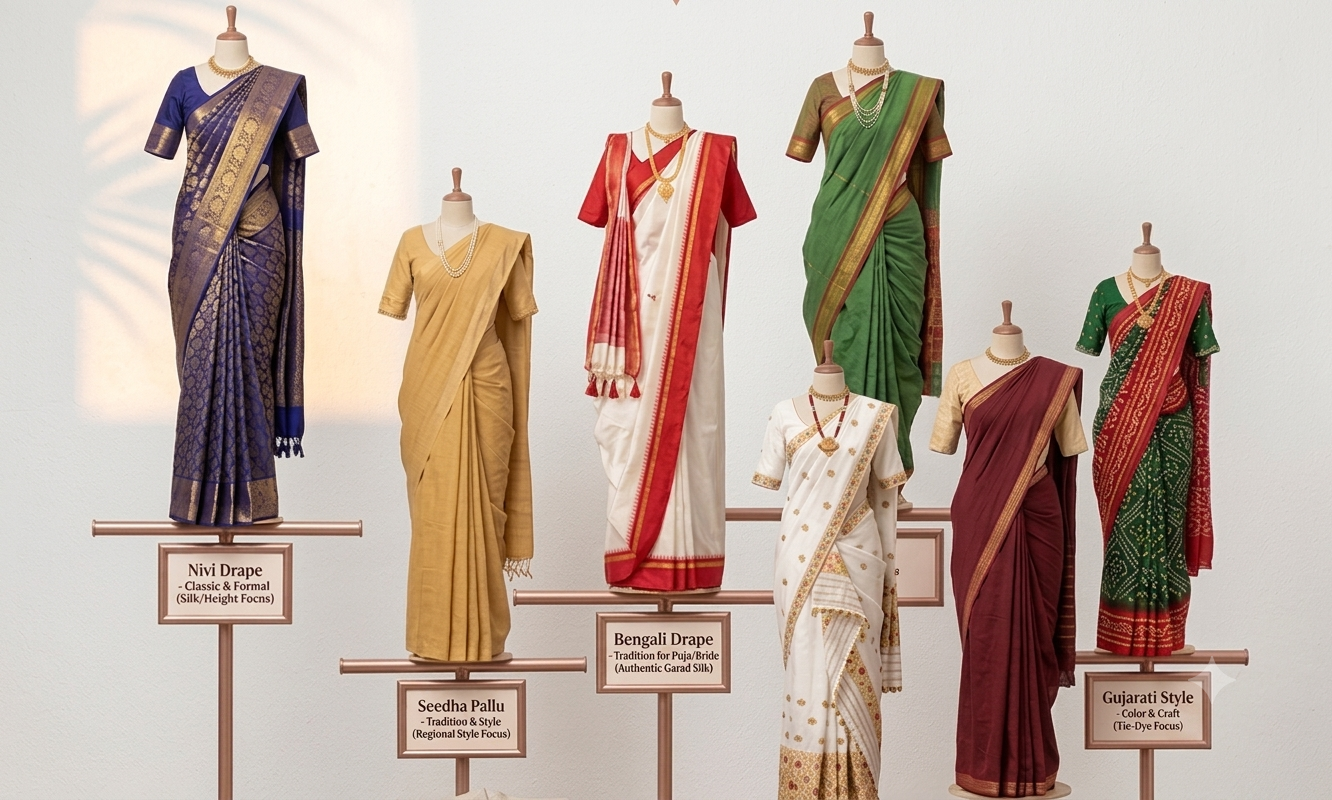
Draping the Perfect Saree: 7 Timeless Techniques
From the classic Nivi to the Bengali drape — how to pick a style that suits your height, fabric and occasion.
Read MorePractical notes on fabric, draping and care — and slower thoughts on inspiration, habit and the pages of Treasure of Precious Knowledge.
12 July 2026
From the classic Nivi to the Bengali drape — how to pick a style that suits your height, fabric and occasion.
Read More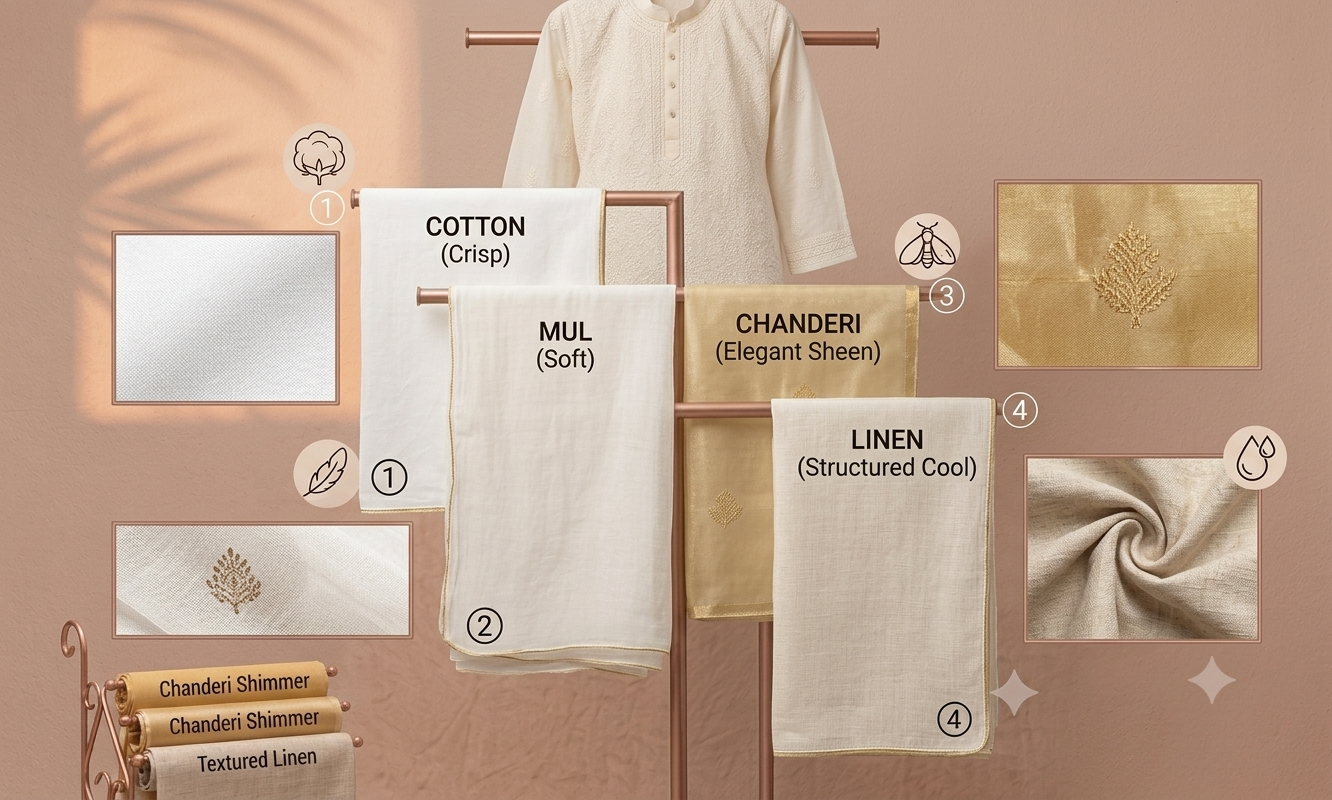 28 June 2026
Cotton, mul, chanderi or linen? A practical guide to staying cool without giving up on elegance.
Read More 15 June 2026
Why a single well-chosen line, read each morning, changes more than a long motivational video.
Read More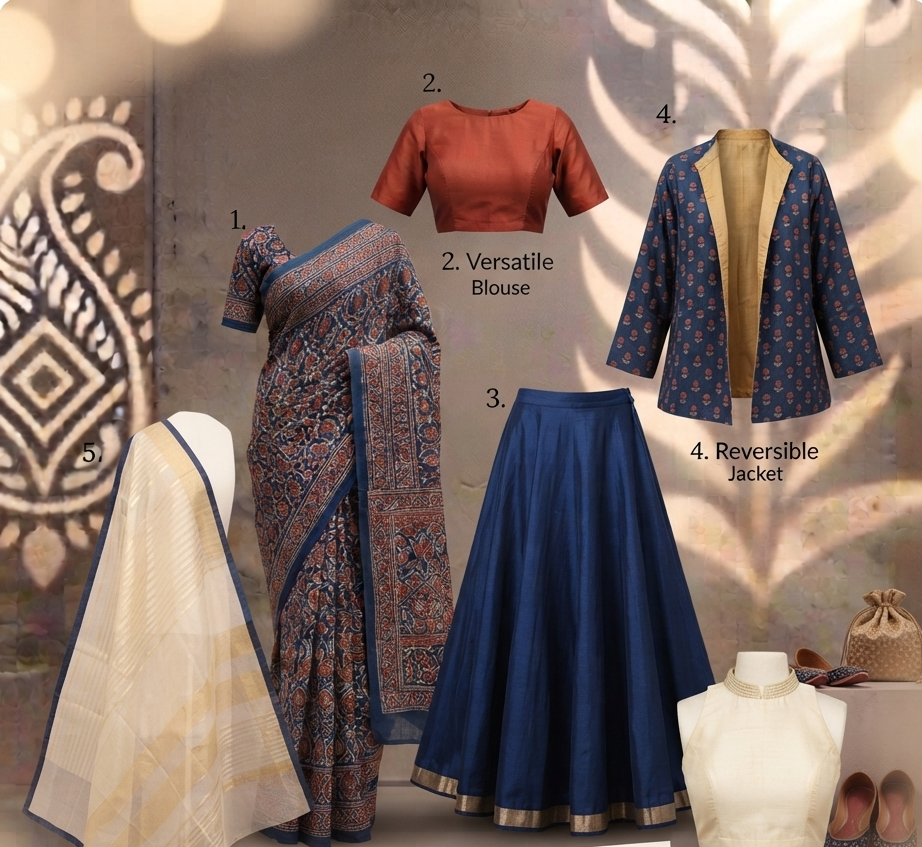 2 June 2026
Six pieces that can be recombined across an entire festive season — without repeating a look.
Read More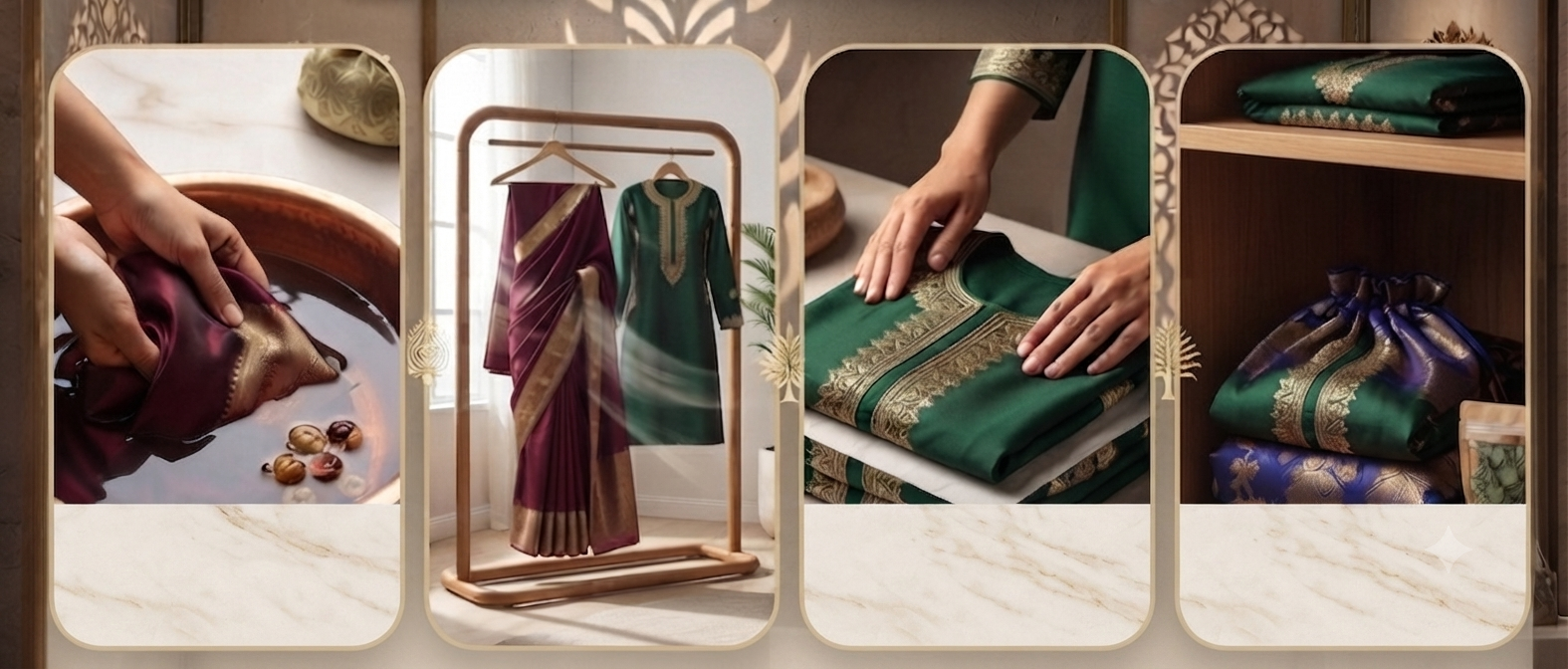 20 May 2026
Washing, drying, folding and storing — the small habits that keep a handloom saree alive for decades.
Read More 5 May 2026
Inspiration fades in hours. Here is how to convert a good line into something that survives the week.
Read MoreA saree does not have a single correct form. The same six yards can read as understated or ceremonial depending entirely on where the pleats sit and how the pallu falls. Fabric decides much of it — a stiff Banarasi holds sharp pleats, while a soft chiffon prefers to fall in a single sweep.
First, the petticoat matters more than the saree. A well-fitted petticoat at the right height gives you a clean line; a loose one undoes the finest silk. Second, count your pleats and keep them even — five to seven, all facing the same way. Third, set the length before you pin: the hem should brush the floor, not sweep it.
Elegance is knowing exactly what to leave out — including one pleat too many.
If you are unsure which drape suits a particular piece, send us the occasion and we will suggest one. It is a question we enjoy answering.
Comfort in an Indian summer is a fabric decision, not a colour decision. What matters is breathability, weight and how quickly a weave releases moisture. A light-coloured synthetic will feel far worse than a mid-toned cotton.
Heavy silks, velvet, brocade and thick georgette hold heat close to the skin. They are wonderful for an air-conditioned reception and difficult for an afternoon function. If the event is outdoors and daytime, choose a lighter fabric with a rich border instead — you get the presence without the weight.
One practical note: lining defeats breathability. A fully lined cotton kurta will feel warmer than an unlined chanderi. Ask before buying, and if you are ordering from us, simply ask us.
Long motivational content has a strange effect: it produces a rush of feeling and almost no change in behaviour. A single sentence works differently. It is short enough to remember, which means it can follow you into the moment where it actually matters.
This is the whole idea behind Treasure of Precious Knowledge. One quote per page, plenty of white space, nothing to scroll past. You open it, read one line and close it. The reading takes ten seconds; the line stays available all day.
A single thought, read at the right moment, can change an entire day.
After a few weeks you will notice something: the right quote begins arriving unprompted, in the middle of a difficult conversation or a long day. That is the point of the practice — not inspiration, but availability.
A festive season rarely needs a new outfit for every event. It needs six well-chosen pieces that can be recombined — and two accessories that change the register of all of them.
A gold-worked dupatta and a contrast blouse. Swapping either one changes an outfit more visibly than buying a new garment. A navy Anarkali with a gold dupatta reads ceremonial; the same Anarkali with a plain stole reads elegant and quiet.
Plan around repeatability, not novelty. The most stylish wardrobes in any family are usually the smallest ones, worn with confidence.
Handloom rewards patience. Machine-woven fabric tolerates neglect; a handloom saree records it. The good news is that proper care is mostly a matter of doing less, more carefully.
Dry in shade, never direct sun — ultraviolet light fades natural dyes fastest. Iron on medium heat with a thin cotton cloth in between, and always on the reverse side so zari does not flatten.
Wrap in unbleached muslin, not plastic; plastic traps moisture and yellows silk. Refold along a different line every three to four months so the creases never become permanent. Keep neem or dried cloves nearby instead of naphthalene, which leaves an odour in silk.
Nothing that lasts ever grew in a hurry — including the habit of caring for it.
Inspiration has a short shelf life. Left alone it fades within hours, which is why people can feel deeply motivated on a Sunday and entirely unchanged by Wednesday. The gap is not willpower. It is the absence of a next step small enough to survive a normal day.
If a quote about discipline moves you, do not commit to an hour. Commit to two minutes at a fixed time. The purpose of the first version of a habit is not progress — it is proof that you are the kind of person who shows up.
Existing routines are the cheapest scaffolding available. You are not building a new habit from nothing; you are borrowing the reliability of an old one.
Discipline is choosing your future self over your present mood.
Track it loosely — a tick on a calendar is enough. And when you miss a day, simply begin again quietly. The strongest people are the ones who restart without announcing it.
Treasure of Precious Knowledge collects the lines worth returning to. Turn a few pages on the homepage, then send us an enquiry if you would like a copy.